
Rwanda Gorilla Families in Volcanoes National Park: Rwanda’s Volcanoes National Park today has a number of 10 habituated gorilla groups for visitors to conduct gorilla trekking/gorilla tracking, and one set aside for research, from which the Kwita Izina baby gorilla naming ceremony is selected. This means several 80 gorilla permits are available each day for tourists going gorilla trekking on a single day.
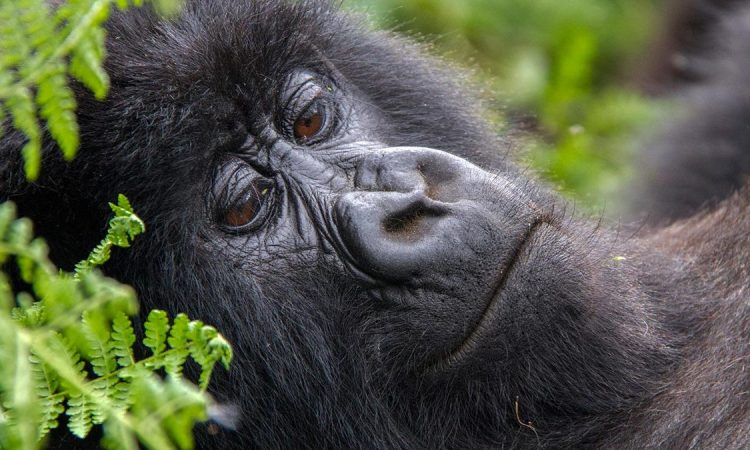
Surprisingly, each gorilla group has distinct and unique characteristics quite different from one another. Below are the gorilla groups available, so that if you happen to do a Rwanda gorilla safari, you may be a signed one of the families below.
Titus Family
The Titus group is the original family named after the silverback Titus, which was born during the days of Dian Fossey’s research at Karisoke, where the gorilla group Dian Fossey was studying. Titus, the young gorilla, lost his family to poachers, including his father, uncle, and brother, and his mother and sister joined other families, leaving Titus to be raised by an unrelated male gorilla. According to Dian Fossey Titus, the infant seemed “underdeveloped and spindly” and had difficulty breathing, but Titus overcame these difficulties.
Susa group (Susa A)
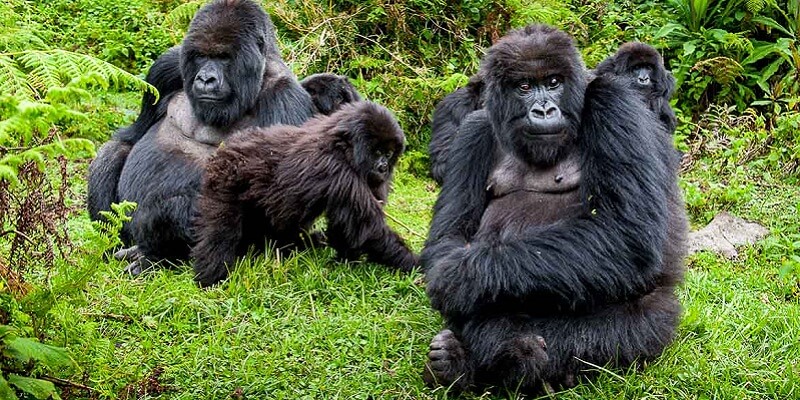
This is the most popular family with previously 42 members before the split. Well known for being the group studied by Dian Fossey during her time in Rwanda from 1967 to 1985. In 2008, the group of 42 individuals split into 2 as it had become so large. The breakaway group was later known as the Susa B or Karisimbi group. Susa A group is well known for its playful twins of Byishimo & Impano, and was named after the Susa River that drains through their home range. The group is composed of 33 members, including 2 silverbacks, and inhabits the forests on the lower slopes of Mt. Karisimbi.
Karisimbi group (Susa B)
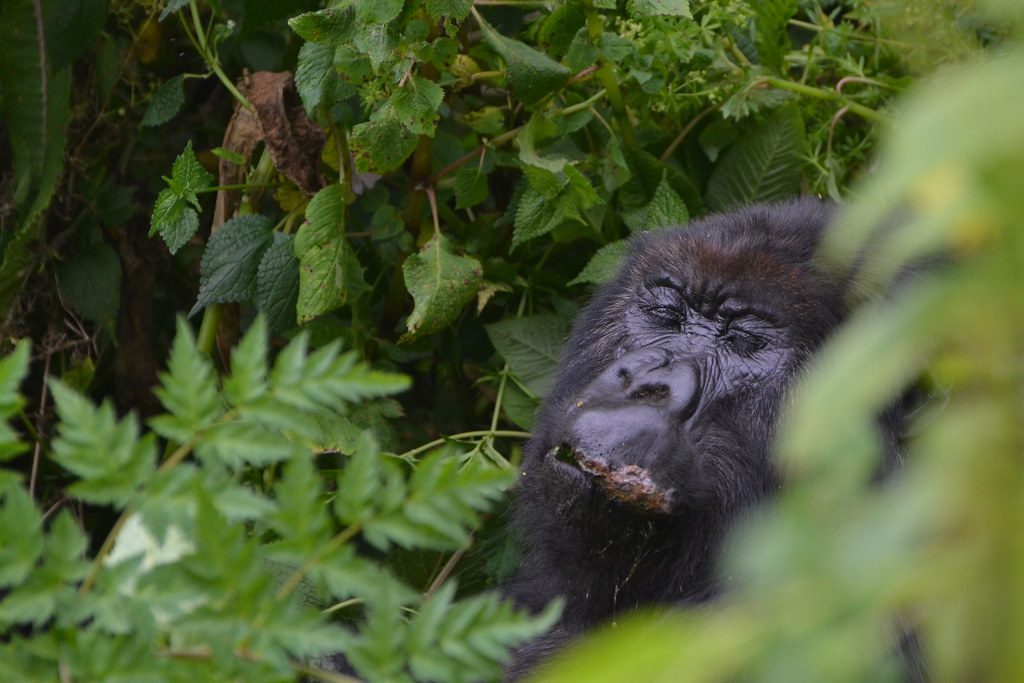
This is sometimes referred to as Susa B and is the group that split from the original Susa in 2008. It is made up of 16 members, including 2 silverbacks. The group is the hardest to track as it inhabits the upper slopes of Mt. Karisimbi at an altitude of 4507m. The group has established its home high in the upper slopes and is suitable for trackers interested in serious hiking. Tracking this group is sometimes difficult as they go further high, though RDB rangers will first locate the group a day before.
Amahoro group
Amahoro is a Kinyarwanda word to mean serenity. As the name goes, the family is known for its peacefulness and congeniality, which, on the other hand, has caused its silverback Ubumwe to lose some members to another group called Umubano. Amahoro means ‘peace,’ and the group has lived up to the expectations of its name and is regarded as the most peaceful group. It is composed of 18 members, including 2 silverbacks, and is a bit strenuous to track as one has to endure a hike up Mt. Bisoke slopes where the group established their home.
Umubano group
This family broke away from Ubumwe silverback as a result of constant battles between Charles and Ubumwe, the two head silverbacks; Charles consistently challenged the supremacy of the leader, Ubumwe. Charles eventually succeeded in breaking away with some members, hence forming the Umubano group. The group is composed of 13 members, including 2 silverbacks, and its name means ‘living together’.
Sabyinyo group
The nearest gorilla family and easiest to track inhabits the gentle slopes between Mt. Sabyinyo and Mt. Gahinga. The group is popular for its giant silverback known as Guhonda, which has kept its main challenger, Ryango, out of the family to remain as a lonely silverback. The group is composed of 13 members, including one silverback, after another was exiled from the group. The commander of the group, Guhonda, is the largest silverback in the park, weighing about 220kg. The group was named after the Sabinyo volcano, which means the ‘old man’s teeth’.
Agashya group – Group 13
This group is named after the initial family member who was 13 at the time of habituation. The group was initially led by a silverback called Nyakarima, but was later overthrown by Agashya, meaning the ‘ News’, who is now the leader, and the family was named after him. Today, the family has grown to 27 members, including one silverback (Agashya). The group occupies the same territory with Sabyinyo group, but sometimes Agashya takes the family deeper into the mountain when it senses danger.
Kwitonda group
This is a migrant group from the Democratic Republic of Congo, which was named after its dominant silverback, called Kwitonda, which means the ‘Humble one’. Because of its migration background, the group wanders in the lower slopes of Mt. Muhabura, and like the Karisimbi group, it is difficult to track as it sometimes moves to the upper slopes. The group is composed of 23 members, including 4 silverbacks.
Hirwa group
This family was formed in 2006 by some members of the Sabyinyo group and others from the 13 group (Agashya). More gorillas joined in, and now the group is composed of 16 members, including one silverback. The group derived its name from its formation process that was out of luck. Hirwa means ‘the Lucky one,’ and as luck has it, the group got twins in 2011. Hirwa group inhabits the foothills of Mt. Sabyinyo to the side of Mt Gahinga.
Ugenda group
This is a Kinyarwanda word ‘Ugenda’ to mean ‘on the move’ or ‘mobile’. The group was named after its unique behavior of roaming from place to place. It consists of 11 members, including 2 silverbacks, and wanders around the Karisimbi area, making it very difficult to track since it has no particular home.
Bwenge group
This group was formed as early as 2007 by Bwenge and was named after him, the group’s dominant silverback, after he had left his Natal group and was joined by females from other groups. The group occupies the slopes of Karisoke volcano between Karisimbi and Bisoke mountains and had witnessed dark times when its 6 infants died. The group has, however, recovered and now has 11 members, including one silverback.
Bwenge is a Kinyarwanda word which means ‘Wisdom,’ and it’s no wonder that this was the group that featured the Movie ‘Gorillas in the Mist’. In conclusion, with the description given, you should have a good picture of the characteristics and nature of each gorilla group and be in a position to choose which gorilla family to track while in Volcanoes National Park.